Call Us

(757) 317-4500

2016 25th St,

Newport News, VA

Family Nurse Practitioner & Nursing Students

Learning to See the Whole Patient

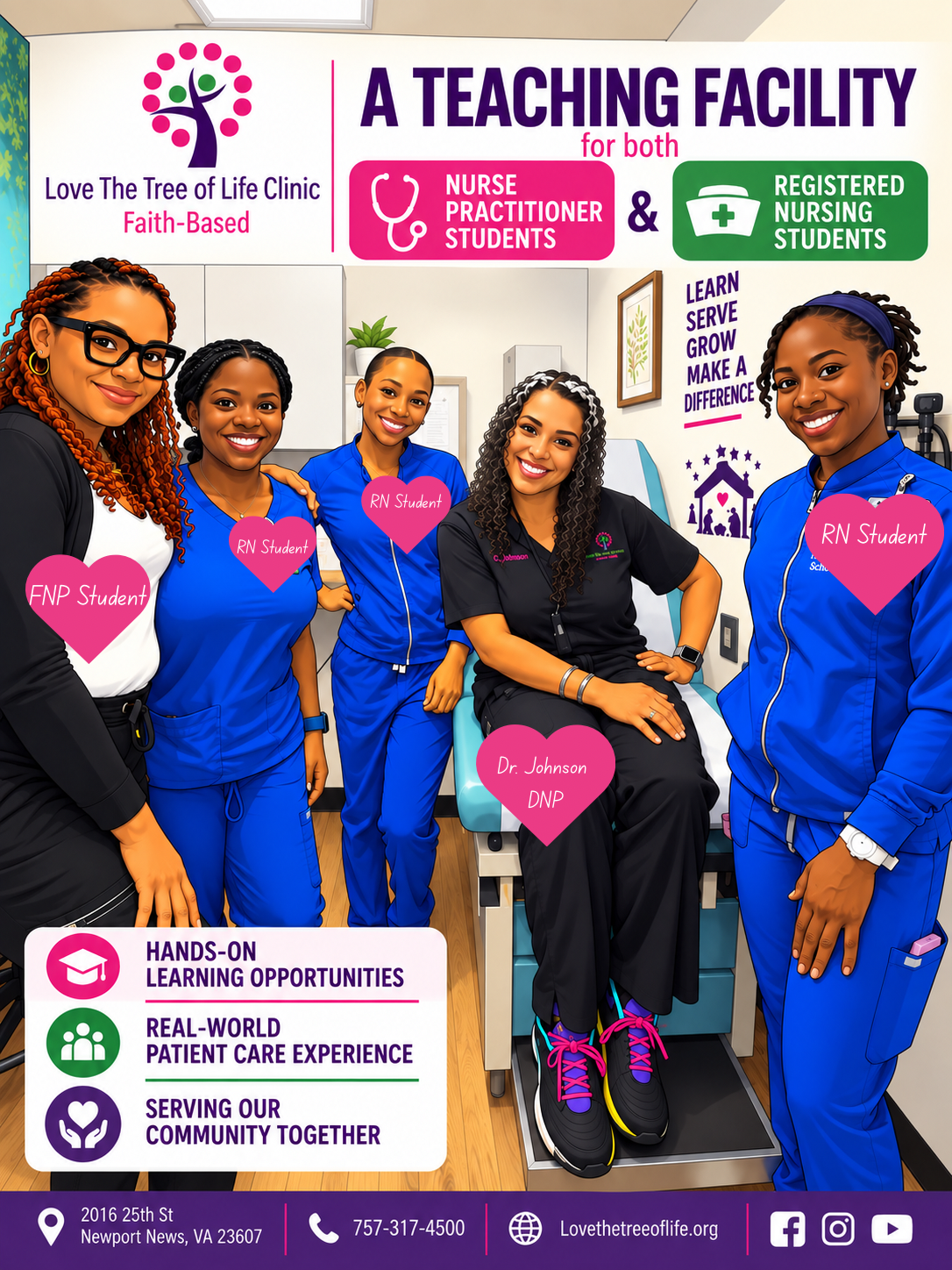
Love The Tree of Life Clinic is a teaching facility for Family Nurse Practitioner and nursing students. Here, you’ll gain real-world experience while making a meaningful impact in our community.
What You’re Walking Into

  • Love The Tree of Life Clinic is a free, faith-based medical ministry and 501(c)(3) non-profit serving individuals who may have limited access to traditional healthcare.
  • You will encounter patients with acute concerns, chronic conditions, preventive-care needs, social needs, and behavioral or mental-health concerns.
  • Some patients may be experiencing homelessness, financial hardship, food insecurity, or difficulty navigating the healthcare system.
  • Your experience here is about much more than completing clinical hours—it is about developing your clinical eyes, ears, judgment, compassion, and professionalism.

Your Assessment Starts at the Door

  • Assessment begins the moment the patient walks in.
  • Before you ever touch a blood-pressure cuff, ask yourself:
    • How are they walking?
    • Are they short of breath?
    • Are they alert and oriented?
    • Do they appear anxious, confused, fearful, agitated, withdrawn, or unusually tired?
    • Is their speech clear and appropriate?
    • Does their clothing or hygiene suggest an unmet need?
    • Do you notice wounds, swelling, difficulty moving, or other visible concerns?
  • Observe without judging.
  • Unusual behavior, communication, dress, or hygiene can have many explanations—culture, age, disability, mental-health needs, medical illness, housing instability, personal preference, or something else entirely.
  • Your job is not to assume the reason. Your job is to notice, respectfully inquire when appropriate, and communicate concerns to your instructor/provider.

Bedside Manner IS a Clinical Skill

  • How you greet someone can determine whether they trust the healthcare team.
  • Introduce yourself and explain your role.
  • Make eye contact when culturally appropriate.
  • Listen before interrupting.
  • Protect dignity and privacy.
  • Avoid judgmental language.
  • Learn to communicate with:
    • children and adolescents
    • older adults
    • patients with limited health literacy
    • individuals experiencing homelessness
    • patients with mental-health or substance-use concerns
    • people whose culture or life experiences differ from your own
  • Remember: People may forget what you did, but they often remember how healthcare made them feel.

Entry-Level Tasks Are NOT “Just Basic Tasks

  • Vital signs teach you to recognize normal versus abnormal.
  • Height, weight, BMI, glucose checks, and other screenings teach you to identify patterns and risk.
  • Rooming patients teaches organization and prioritization.
  • Medication reconciliation teaches you to ask better questions.
  • Gathering a history teaches you to listen for what wasn’t initially said.
  • Infection-control practices teach patient and staff safety.
  • Patient education teaches you to translate medical information into understandable language.
  • Observing the provider teaches you clinical reasoning and decision-making.
  • Helping with basic patient needs teaches you that healthcare involves the whole person—not simply a diagnosis.

Don’t Measure Your Experience by Documentation

  • You may not spend most of your entry-level experience writing extensive clinical documentation.
  • That does not mean you aren’t learning.
  • Pay attention to:
    • What did the provider notice?
    • What questions changed the direction of the visit?
    • What abnormal finding mattered?
    • Why was one concern prioritized over another?
    • How did the team adapt communication to that particular patient?
  • These experiences help develop the clinical judgment that eventually makes your documentation meaningful.

Your Challenge While You’re Here

  • Don’t just ask: “What task can I do?”
  • Ask:
    • “What can I observe?”
    • “What can I learn?”
    • “What did I miss?”
    • “Why did you ask that question?”
    • “What made you concerned about that finding?”
  • Become comfortable learning from every encounter—even when you’re not the person performing the procedure.

Ready to Join Our Team of Learners?

At Love The Tree of Life Clinic, we want you to leave with more than completed clinical hours.

We want you to begin developing the ability to walk into a room, see the whole person, recognize what matters, communicate with dignity, identify changes, and understand when something just doesn’t look right.

Skills can be practiced. Documentation can be taught. But learning how to truly SEE your patient is the beginning of becoming an exceptional compassionate healthcare professional.